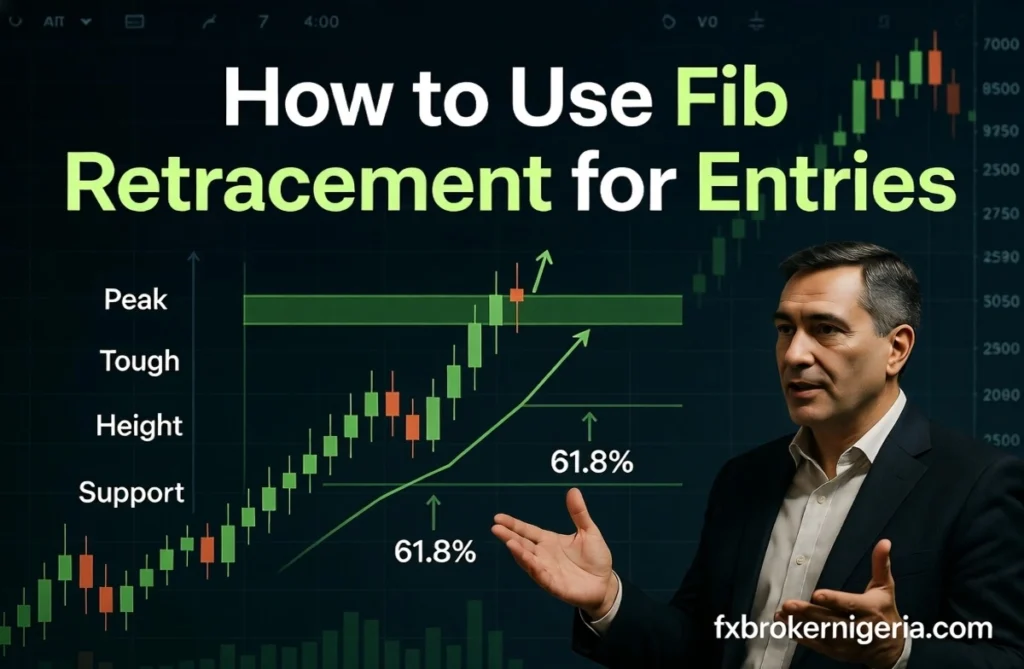
Fibonacci retracement remains one of the most widely used tools in technical analysis.
The reason is simple.
Markets rarely move in straight lines.
Strong trends usually pause, pull back, and search for value before continuing higher or lower. Fibonacci retracement helps traders identify those potential value zones.
The problem is that most traders use Fibonacci incorrectly.
They treat it like a magical prediction tool instead of a framework for understanding momentum, pullbacks, and trader psychology.
Effective Fibonacci trading requires:
- clean chart structure
- trend awareness
- confluence
- patience
- disciplined execution
The goal is not to trade every retracement.
The goal is to identify high probability pullbacks inside strong trends.
Why Fibonacci Retracement Still Works In Modern Markets
Many technical indicators lose effectiveness when traders overuse them.
Fibonacci retracement survived because it reflects recurring human behavior.
Markets move through cycles of expansion and pullback. Traders constantly search for value during those pullbacks.
Fibonacci levels often become psychological areas where:
- institutions add to positions
- traders take profits
- momentum slows temporarily
- buyers and sellers reassess value
This creates self reinforcing reactions around key levels.
Fibonacci works partly because large numbers of traders watch the same zones.
That collective attention matters.
Still, Fibonacci is not predictive.
It is a lagging framework based on previous price movement.
Professional traders understand this difference clearly.
What Fibonacci Retracement Actually Measures
Most beginner traders memorize Fib levels without understanding what they represent.
That creates shallow execution.
Fibonacci retracement measures how deeply price pulls back during a trend before potentially continuing.
It helps traders estimate where momentum may stabilize after expansion.
The Golden Ratio Explained Simply
The Fibonacci sequence produces a mathematical relationship known as the Golden Ratio.
This ratio appears repeatedly in:
- nature
- architecture
- biology
- financial markets
The most important trading ratio is 1.618.
From this relationship, traders derive important retracement levels such as:
- 38.2 percent
- 50 percent
- 61.8 percent
These levels often become areas where market participants react emotionally and strategically.
Why Traders React To Fib Levels
Fibonacci works because traders collectively treat these levels as potential value zones.
For example:
- buyers may wait for pullbacks before entering trends
- institutions may add size during retracements
- short sellers may take profits at key levels
The levels themselves do not move the market magically.
Trader behavior around those levels creates reactions.
That distinction matters.
The 50 Percent Myth Every Trader Should Understand
Many traders assume the 50 percent retracement comes directly from Fibonacci mathematics.
It does not.
The 50 percent level is not technically a Fibonacci ratio.
Yet professional traders still treat it as one of the most important retracement zones in trading.
Why?
Because markets often retrace roughly half of a move before deciding whether the trend remains strong enough to continue.
The 50 percent level became psychologically important through decades of repeated market behavior.
Ignoring it would be a mistake.
How To Draw Fibonacci Retracement Correctly
Incorrect Fib placement ruins otherwise good analysis.
The process must remain consistent.
Drawing Fib In An Uptrend
During an uptrend:
- start from the Swing Low
- drag the tool to the Swing High
This measures the pullback zones inside the bullish move.
Drawing Fib In A Downtrend
During a downtrend:
- start from the Swing High
- drag the tool to the Swing Low
This measures potential retracement zones before bearish continuation.
Why The Wick Rule Matters
Many traders ignore candle wicks when drawing Fib levels.
That creates inaccurate zones.
Use the extreme edges of price action, including the wicks.
Wicks represent emotional extremes where buyers or sellers aggressively reacted.
Ignoring them removes important market information.
The Clean Chart Method
One of the smartest Fibonacci improvements involves simplifying the chart.
Many platforms overload Fibonacci settings with unnecessary levels and background colors.
This creates visual noise.
For most traders, the highest value levels are:
- 38.2 percent
- 50 percent
- 61.8 percent
Removing less relevant levels helps traders focus on decision making instead of staring at cluttered charts.
Clean charts improve clarity.
Clarity improves execution.
The Three Best Fibonacci Entry Zones
Not all retracement levels carry equal weight.
Some zones consistently produce stronger reactions.
The 50 Percent Retracement
The 50 percent pullback often represents the first major value zone.
Shallow retracements usually signal strong trend momentum.
Aggressive traders sometimes enter here when:
- trend momentum remains strong
- volume supports continuation
- market structure stays intact
The 50 To 61.8 Percent Golden Zone
This area often produces the highest quality entries.
The market pulls back deeply enough to remove emotional buyers while still preserving trend structure.
Many experienced traders focus almost exclusively on this zone.
It balances:
- strong reward potential
- controlled risk
- trend continuation probability
This is commonly called the Golden Zone.
The 61.8 Percent Golden Ratio Entry
The 61.8 percent level represents a very deep retracement.
This zone often creates emotional discomfort because traders begin doubting the original trend.
Ironically, that discomfort can create opportunity.
When strong trends survive deep pullbacks, the continuation move often becomes powerful.
Still, confirmation matters enormously here.
Blind entries become dangerous.
The Blended Entry Method
Many traders place one large order at a single Fib level.
A more flexible approach involves scaling gradually.
For example:
- partial entry at 38.2 percent
- second entry at 50 percent
- final entry at 61.8 percent
This blended entry method averages position price while reducing emotional pressure.
It also prevents frustration when price narrowly misses one specific level before reversing.
Professional trading often involves flexibility rather than precision obsession.
Why Confluence Matters More Than Fibonacci Alone
Fibonacci becomes far more effective when combined with other market signals.
This process is called confluence.
Confluence increases probability because multiple independent factors support the same idea.
Support And Resistance
A Fibonacci level sitting directly on major support creates stronger bullish context.
The same principle applies to resistance during bearish setups.
Horizontal levels matter because traders historically reacted there.
Combining structure with Fibonacci creates more meaningful decision zones.
Moving Averages
Moving averages help confirm broader trend direction.
For example:
- 61.8 percent retracement plus rising 200 SMA
- 50 percent pullback plus 20 EMA support
This alignment improves trend continuation probability significantly.
Candlestick Confirmation
Never assume the market must react to Fib levels automatically.
Wait for confirmation.
Useful confirmation signals include:
- bullish engulfing candles
- bearish engulfing candles
- strong rejection wicks
- momentum candle color changes
Confirmation helps traders avoid blind entries during weak market conditions.
How To Place Stop Losses With Fibonacci
Weak stop placement destroys otherwise good strategies.
Many traders place stops too tightly around Fib levels and get shaken out by normal volatility.
For bullish setups entered near 61.8 percent:
- conservative stops often sit below the 100 percent level
- aggressive stops may sit halfway between 61.8 percent and 100 percent
The stop should represent:
- logical structure invalidation
- not emotional discomfort
If price breaks deeply beyond the retracement structure, the setup likely failed.
Accept the loss and move on objectively.
Using Fibonacci Extensions For Profit Targets
Many traders use Fibonacci for entries but ignore extensions completely.
That leaves profit targets vague and emotional.
Fibonacci extensions help project where momentum may continue after the retracement ends.
The most common targets include:
- 161.8 percent extension
- 261.8 percent extension
Extensions create structured exit planning instead of random profit taking.
That improves consistency significantly.
Why Fibonacci Trades Fail
Fibonacci works best during healthy trending environments.
It struggles when market structure weakens.
Sideways Markets
Range bound conditions create messy retracements and weak continuation.
Price constantly fluctuates without clear momentum.
Fib levels lose effectiveness because no strong directional energy exists.
Major News And Fundamentals
Major news events can completely override technical structure.
Interest rate decisions, earnings reports, geopolitical shocks, or economic releases can invalidate Fib reactions instantly.
Technical analysis works best when fundamentals remain stable.
Low Volume Conditions
Weak participation reduces reliability.
Without strong market involvement, price may drift through Fib zones without meaningful reaction.
Volume matters.
Blind Entries Without Confirmation
Many traders lose money because they assume price must reverse at a Fib level automatically.
That assumption creates emotional entries.
Fib levels should create awareness zones, not guaranteed reversals.
Confirmation protects traders from low quality setups.
The History Test Most Traders Ignore
Before trading any asset with Fibonacci, scroll backward on the chart.
Study recent behavior carefully.
Ask:
- Does this asset respect Fib pullbacks consistently?
- Does momentum react cleanly around retracement zones?
- Does price constantly ignore structure?
Some assets naturally respect Fibonacci behavior more than others.
If the market ignored Fib repeatedly during recent sessions, avoid forcing the strategy.
Not every market environment supports every tool.
The Psychology Behind Fibonacci Trading
Most Fibonacci tutorials ignore psychology completely.
That creates a major gap.
Patience And Waiting For Value
Fib retracement trading rewards patience.
Instead of chasing emotional breakouts, traders wait for value zones inside established trends.
This mindset reduces impulsive entries dramatically.
Avoiding Emotional Entries
Many traders fear missing moves.
That fear pushes them into poor entries far away from structure.
Fibonacci encourages calm decision making by defining planned reaction zones ahead of time.
Preparation reduces emotional chaos.
Accepting Missed Trades
Sometimes price reverses before reaching the perfect Fib level.
Other times confirmation never appears.
Disciplined traders accept missed opportunities calmly.
Forcing trades destroys consistency.
Patience protects capital.
Common Fibonacci Mistakes
The most common Fibonacci mistakes include:
- Drawing Fib incorrectly
- Ignoring market trend direction
- Trading sideways conditions
- Using Fib without confluence
- Entering blindly without confirmation
- Placing emotional stop losses
- Overcomplicating charts
- Treating Fib as magical prediction
Most traders do not fail because Fibonacci fails.
They fail because execution lacks structure, patience, and context.
Conclusion
Fibonacci retracement remains powerful because it reflects recurring market psychology around value, pullbacks, and momentum continuation.
Still, the tool only becomes effective when traders stop using it mechanically.
Strong Fibonacci traders focus on:
- clean chart structure
- trend quality
- confluence
- confirmation
- disciplined risk management
- emotional patience
The real edge does not come from drawing lines.
It comes from understanding why traders react around those lines in the first place.
Once traders combine Fibonacci with context and discipline, the tool becomes far more practical and far less emotional.